

Why Fresh Milled Grain Supports Gut Health, Digestion, and Whole-Body Wellness
Why Fresh Milled Grain Is One of the Most Underrated Gut-Healing Foods
For years, bread has been labeled the problem.
Gluten. Carbs. Wheat. Inflammation.
But what if the issue isn’t grain —
what if it’s how far removed modern grain is from the way God designed it to be eaten?
Fresh milled grain has quietly made its way back into kitchens, homesteads, and health-focused homes — not as a trend, but as a return. A return to food that is whole, living, and nourishing rather than stripped, processed, and depleted.
When we talk about gut health, nutrient absorption, and sustainable nourishment, fresh milled grain deserves serious attention.
Let’s talk about why.
What Is Fresh Milled Grain?
Fresh milled grain is exactly what it sounds like: whole grains that are ground into flour just before use.
Unlike conventional flour, which is milled weeks or months in advance, fresh milling preserves all three essential parts of the grain:
The bran (fiber, minerals, antioxidants)
The germ (healthy fats, vitamin E, B vitamins)
The endosperm (complex carbohydrates and protein)
Commercial flour typically removes the bran and germ to extend shelf life, then “enriches” the flour by adding back synthetic nutrients. Fresh milled grain skips this step entirely — keeping the grain intact, alive, and nutritionally complete.
This difference matters deeply, especially for digestion.
Why Fresh Milled Grain Is So Beneficial for Gut Health
1. It Feeds the Gut Microbiome — Not Just Fills the Stomach
Whole grains are rich in dietary fiber, which acts as a prebiotic — food for beneficial gut bacteria.
Multiple studies show that replacing refined grains with whole grains improves gut microbiota diversity and supports a healthier inflammatory response in the digestive tract. In controlled trials, participants consuming whole grains experienced improvements in immune markers and microbial balance over time.
Refined flour lacks this benefit because the fiber-rich bran has been removed.
Fresh milled grain delivers fiber in its natural form, supporting:
Regular bowel movements
Reduced gut inflammation
Improved nutrient absorption
This isn’t about eating more — it’s about eating better.
2. Nutrient Retention Is Dramatically Higher
One of the most overlooked benefits of fresh milled grain is nutrient density.
A large farm-to-table analysis found that refined flour loses:
Up to 72% of major minerals
Over 60% of trace minerals
Significant amounts of B vitamins and vitamin E
These nutrients are critical for:
Digestive enzyme production
Nervous system regulation
Energy metabolism
Hormonal balance
Fresh milled grain preserves these nutrients because nothing is removed or oxidized during long storage.
Food that nourishes the gut must first nourish the body at the cellular level.
3. Fresh Milled Grain Retains Natural Antioxidants
Whole grains contain naturally occurring antioxidants and phytochemicals that help protect the gut lining and reduce oxidative stress.
These compounds degrade over time once grain is milled and exposed to air. Fresh milling — followed by immediate use — preserves these protective compounds in a way store-bought flour cannot.
Interestingly, compounds like phytic acid, often criticized in health circles, have been shown to:
Support colon health
Stimulate beneficial digestive enzymes
Contribute to antioxidant protection when consumed as part of a whole food
Context matters. Whole foods behave differently than isolated nutrients.
4. Slower Digestion, Better Blood Sugar Stability
Fresh milled grain digests more slowly than refined flour due to its intact fiber and healthy fats.
This leads to:
Fewer blood sugar spikes
Improved insulin response
Greater satiety after meals
Blood sugar stability directly impacts gut health, hormone balance, and inflammation. When digestion slows, the gut has time to do what it was designed to do.
Many people who struggle with store-bought bread find that bread made with fresh milled grain feels completely different in the body.
5. Long-Term Health Benefits Are Well Documented
Large-scale research consistently links whole grain consumption to reduced risk of:
Type 2 diabetes
Heart disease
Stroke
Colorectal cancer
Metabolic syndrome
Fresh milled grain offers the purest expression of whole grains — without the processing that undermines these benefits.
This isn’t about perfection. It’s about alignment.
Real-Life Testimonies: What People Actually Experience
While research provides the framework, real-world experience brings it to life.
Many families who switch to fresh milled grain report:
Less bloating and digestive discomfort
Improved regularity
Better energy levels
Increased satisfaction after meals
Dietitians and functional practitioners often note that clients tolerate fresh milled grain better than commercial flour — even those who believed they were “sensitive” to wheat.
This doesn’t mean fresh milled grain is a cure-all. But it does suggest that how food is processed matters just as much as what food is eaten.
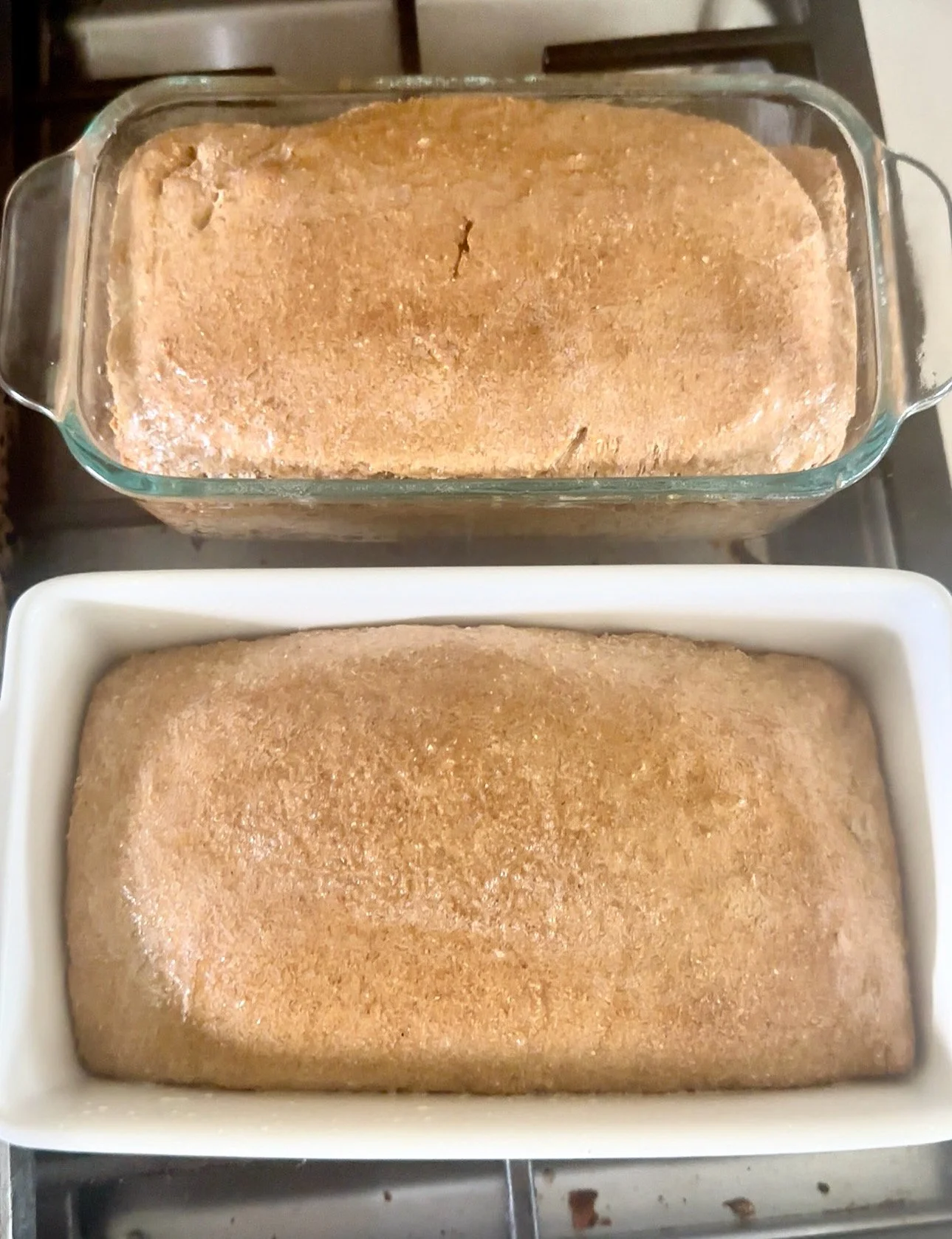
Here’s an easy recipe for fluffly sandwich bread using fresh milled flour:
Prep time: 30 min
Cook time: 30 min
Servings: 32 people
Calories: 195
Ingredients:
1 ½ cups warm water
2 tsp. salt
½ c. olive oil (100 grams)
½ c honey (130 grams)
5-6 c. fresh milled flour finely milled (675- 810 grams)
1 Tbsp. instant yeast
2 tsp. lemon juice
Instructions:
Combine wet ingredients and the salt in the mixer. (Water, salt, oil, lemon juice, and honey)
Next add half your flour. Mix until well combined.
Allow the dough to rest in the mixer for 10 minutes before proceeding. This will make a softer loaf and helps to hydrate the fresh slour.
Add yeast and the rest of your flour. I like to add the flour slowly, ½ cup at a time and watch how the dough reacts. You don’t want to add too much flour. Add just enough to where a soft dough forms and the dough begins to pull away from the sides of the bowl.
Knead dough until smooth and elastic. This takes about 6-8 minutes with a mixer and 10+ minutes if you are kneeding by hand.
First rise. Move the dough to a large bowl and place somewhere warm. I like to use my barely warmed oven (preheat for a few minutes and then turn it off). Allow the dough to rise until double in size, in a warm spot that takes 30-45 minutes. If rising on the counter, cover the dough and it may take longer to double in size.
Turn dough out onto clean counter and cut in half. Shape loaves and place in greased loaf pans and allow to rise until double in size again.
Once doubled bake at 350* F for 25-30 minutes until tops are golden brown and the bread is cooked through, about 190* F.
Nutrition:
Serving: 1 slice | Calories: 195kcal | Carbohydrates: 32g | Protein: 5g | Fat: 5g | Saturated fat: 0.5g | Polyunsaturated Fat: 0.4g | Monosaturated Fat: 2g | Sodium: 121mg | Potassium: 8mg | Fiber 5g | Sugar: 4g | Vitamin A: 0.02iu | Vitamin C: 0.1mg | Calcium: 1mg | Iron: 2mg